 |
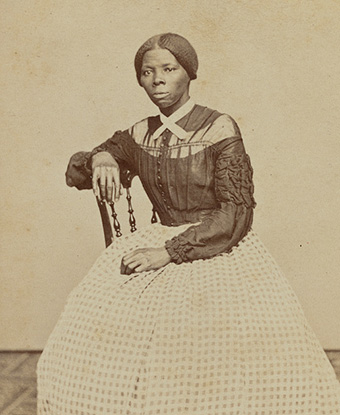
| Harriet Tubman in 1868 or 1869 |
Good morning, everyone.
My name is Harriet Tubman. I was born into slavery in Maryland around the year 1822. Today, people remember me as a leader of the Underground Railroad, but my life began under very different circumstances.
As a child, I experienced the harsh realities of slavery. I worked long hours and faced constant hardship. I even suffered a serious head injury after being struck while trying to protect another enslaved person. That injury affected me for the rest of my life, but it did not take away my determination.
As I grew older, I came to believe that slavery was more than unfair. It was a system that denied human beings their freedom, dignity, and rights. I knew I could not accept that life forever.
In 1849, I made the courageous decision to escape. The journey was dangerous. If I had been caught, I could have been severely punished or sold farther away from my family.
When I finally reached freedom, I later said, "When I found I had crossed that line, I looked at my hands to see if I was the same person."
For the first time in my life, I was free.
But freedom for myself was not enough.
I knew that my parents, brothers, sisters, and many friends were still enslaved. Leaving them behind weighed heavily on my heart. I wanted my family to experience the same freedom that I had found.
 |
| Harriet Tubman with her extended family |
I also married a free Black man named John Tubman before I escaped. However, when I returned after gaining my freedom, I learned that he had chosen to remain in Maryland and had remarried. Although this was painful, I continued my work because I believed the fight against slavery was bigger than my own personal struggles.
As my family grew larger through the people I helped rescue, I came to see many of them as brothers and sisters in a shared search for freedom.
Every trip was dangerous. Slave catchers searched for us, and rewards were offered for my capture. Yet I continued because I believed every person deserved the chance to live free.
Looking back on those journeys, I proudly said, "I never ran my train off the track, and I never lost a passenger."
My commitment to freedom came from a simple belief. Every person has the right to liberty.
That is why I once said, "I had reasoned this out in my mind; there was one of two things I had a right to, liberty or death; if I could not have one, I would have the other."
When the Civil War began, I continued fighting for freedom. I served the Union Army as a nurse, scout, and spy. In 1863, I helped lead the Combahee River Raid, an operation that helped free hundreds of enslaved people.
Helping others gain their freedom was one of the greatest honors of my life.
After the war, I continued working for justice. I supported education, cared for people in need, and advocated for women's voting rights.
When people remember me, I hope they do not think of me as someone without fear. I was often afraid.
The difference is that I did not let fear stop me.
My life teaches us that one person can make a difference when they stand up for what is right. Freedom is precious, and every human being deserves it.
I am Harriet Tubman.
Thank you.
AI DISCLOSURE - For this assignment, I used Microsoft Copilot as a research and writing support tool. Copilot helped me gather background information about Harriet Tubman, locate historical sources, and organize information into a role play script. I reviewed the generated content, verified key facts and quotations using reliable historical sources, and edited the script to fit the requirements of the assignment. The final submission reflects my own understanding and presentation of the topic, with AI used as a tool to assist the research and drafting process.


No comments:
Post a Comment